


By Chappy Hakim
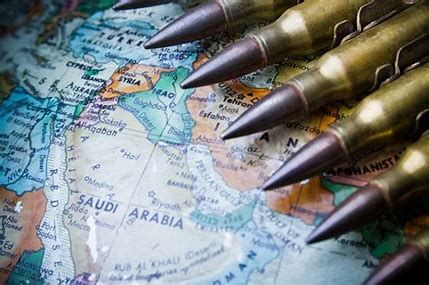
The armed conflicts in the Middle East in 2026 are not merely geopolitical issues unfolding far from Indonesia. Their repercussions ripple across various sectors of life, including aviation. When airspace is closed, flight routes are severed, fuel prices surge, and major global aviation hubs are disrupted, we are reminded once again that civil aviation does not exist in isolation. Aviation is an integral component of a nation’s strategic system.
On 28 February 2026, when the United States and Israel launched coordinated strikes against Iran, the global aviation industry faced another major shock. Within the first 72 hours, thousands of flights were cancelled. In the ensuing weeks, tens of thousands of flights were affected. Several countries in the Middle East closed or restricted their airspace, disrupting flight corridors linking Asia, Europe, and Africa. Notably, the most significant issue was not merely the number of grounded aircraft. The crisis exposed a latent vulnerability beneath the apparent success of modern aviation systems, an excessive reliance on a small number of strategic nodes.
For decades, Dubai, Abu Dhabi, and Doha have evolved into global air traffic hubs. The hub-and-spoke model has delivered remarkable efficiency, enabling the centralised management of aircraft, passengers, cargo, and crew, thereby reducing costs and enhancing connectivity. In peacetime, such concentration constitutes an advantage. In times of crisis, however, this advantage can transform into a liability. When a single major node is disrupted, the effects do not remain localised, they propagate through the wider network. Flights must be rerouted, travel times lengthen, fuel costs escalate, schedules unravel, and passenger backlogs accumulate. The efficiency cultivated over years suddenly devolves into dependency. Herein lies the first critical lesson for Indonesia, efficiency without redundancy is vulnerability.
We have too often measured aviation success solely by efficiency metrics,cost reduction, aircraft utilisation, passenger throughput, and airport capacity. These are undoubtedly important. Yet, in an increasingly uncertain world, we must pose an additional question, what happens when our primary system is disrupted? Consequently, national aviation resilience cannot be built merely by expanding capacity. We require alternative networks, backup airports, contingency routes, inter-hub cooperation, and pre-established crisis scenarios. In other words, redundancy must be embedded as a fundamental element of national aviation system design. Indonesia, as an archipelagic state, has compelling reasons to adopt such a framework.
The second lesson is even more fundamental, aviation fuel security is a matter of national security. The conflict around the Strait of Hormuz has underscored the global vulnerability to disruptions in strategic energy routes. As one of the world’s primary oil trade chokepoints, the strait is not merely an economic concern. Its disruption can immediately affect fuel prices, transport costs, the aviation industry, trade, and even the economic stability of nations far from the conflict zone. This compels us to broaden our perspective on energy resilience.
Aviation fuel has traditionally been treated as a commercial concern, available or unavailable, expensive or cheap. In crisis situations, however, fuel availability determines whether civilian aircraft can operate, whether national logistics can function, and whether defence forces can execute their missions. Aviation fuel resilience, therefore, is an integral aspect of national resilience. For Indonesia, this issue is particularly pertinent given its vast airspace and its geographical position between two oceans and two continents. National sovereignty in the air is not merely a legal claim to airspace; it must be manifested through the capacity to control, utilise, and enforce law within national airspace. This is where civil aviation and national air power converge.
Modern air power can no longer be understood merely in terms of the number of fighter aircraft. It constitutes a system comprising radar, early warning systems, command and control centres, communications, air defence, cyber capabilities, fighter and transport aircraft, and the human resources capable of integrating these elements. Indonesia has taken significant steps through the procurement of new systems and platforms, including the Rafale and A400M. However, modernisation must not end with the acquisition of hardware. Sophisticated aircraft lacking integrated systems remain merely a collection of platforms with limited utility. Lessons from contemporary conflicts demonstrate that the capacity to integrate sensors, information, command, control, and various force elements is the decisive factor. Therefore, developing an integrated and adaptive National Air Defence System must be a long-term strategic agenda.
The geopolitical crisis also compels us to re-examine the relationship between resilience and aviation sustainability. Sustainable aviation fuel (SAF) has thus far been discussed primarily in the context of carbon emission reduction. That perspective is valid, but it must now be broadened. SAF also pertains to energy resilience. If Indonesia merely substitutes conventional fuel with sustainable alternatives while remaining wholly dependent on imports, we may reduce emissions but not necessarily enhance national resilience. Domestic SAF development must be viewed as part of the national energy strategy. Indonesia possesses the resources and raw material potential to build its own SAF industry. If seriously pursued, such a policy would not only support environmental objectives but also reduce energy dependency, create new industries, and simultaneously strengthen Indonesia’s position within the regional aviation ecosystem.
The Middle East crisis delivers a clear message, the aviation world can no longer be designed solely for normal conditions. We live in an era of profound uncertainty. Armed conflicts, trade wars, supply chain disruptions, cyberattacks, natural disasters, pandemics, and climate change can strike with little warning. The measure of national aviation success should not be limited to how efficiently the system operates under routine circumstances. A more critical indicator is how swiftly the system can withstand, adapt, and recover from disruptions. This is the essence of resilience.
Building aviation resilience means constructing a national ecosystem capable of interlinking civil aviation, air defence, energy, technology, industry, and foreign policy interests. We must not view civil aviation and air power as separate domains, they share the same airspace and confront the same strategic environment. The Middle East crisis has served as a stress test for global aviation. We need not wait for a similar crisis in our region to begin learning. It is time for Indonesia to develop an aviation system that is not only efficient under normal circumstances but also robust in times of change. The question is not merely whether we can operate aircraft. It is whether we can ensure that Indonesian skies remain safe, open, and functional under any conditions. That is the essence of national aviation resilience and an inseparable dimension of national air sovereignty.
Jakarta, 2 September 2026
Chappy Hakim – Indonesia Centre for Air Power Studies.
