


Introduction / Background
Since ancient times, airspace has been an integral part of the concept of state sovereignty. Even long before the Wright brothers successfully flew the first powered aircraft in the early 20th century, the sky was considered an inseparable part of a state’s territory. This awareness did not emerge suddenly but rather resulted from a long accumulation of historical and legal experience.
An ancient Roman adage states, “Cujus est solum, eius est usque ad coelum et ad inferos” — whoever owns the land also owns what is above and below it. This phrase is not merely a legal maxim but a reflection of the strategic awareness that airspace is an absolute component of sovereignty. Since Roman times, the concept of Freedom of the Air or an Open Sky policy has been rejected.
Entering the 20th century, the development of aviation technology compelled the international community to reformulate the concept of air sovereignty within a modern legal framework.
However, in the digital and cyber era, the concept of airspace sovereignty faces new and far more complex challenges. The emergence of Unmanned Aerial Vehicles (UAVs), satellite systems, and network-centric warfare has blurred the physical boundaries of traditional airspace. Threats no longer always come in the form of territorial violations by aircraft but also through navigation system penetration, communication jamming, and cyberattacks on aviation infrastructure. In this context, airspace sovereignty can no longer be understood merely as territorial control, it must be expanded into a multi-domain sovereignty encompassing the electromagnetic spectrum and cyberspace a transformation demanding a redefinition of air defense doctrine in the modern era.
Failure to understand this paradigm shift will cause a nation to lose strategic initiative, as potential adversaries no longer need to physically violate territorial boundaries to paralyze an air defense system. Therefore, the urgency of airspace control today lies not only in jurisdictional aspects but also in a nation’s ability to secure its information space and command networks from non-kinetic attacks.
Historical Roots of Air Sovereignty (From the Roman Era to the Montgolfier Balloon)
In the 18th century, when the Montgolfier brothers attempted to fly an experimental hot air balloon in France, they were immediately and sternly reprimanded by the royal police. The balloon flight required prior police approval. This attitude of the French authorities demonstrates that from the very beginning, the state viewed airspace as a domain requiring licensing and control, not a free realm to be exploited by anyone without supervision. This was all rooted in maintaining public safety and security for those below.
The rejection of freedom of the air in the balloon era was not solely due to technical issues but because it concerned the security and safety of citizens. This makes it clear that even when aviation technology was still limited to balloons, state authorities took a firm stance: airspace is not free territory. It is a domain that must be controlled for national interests, including protecting the population from potential spies, sabotage, or mass panic. Airspace must remain under command and control focused on human security and safety.
History records that the Montgolfier balloon incident was not an isolated example various European kingdoms soon followed France’s lead by issuing regulations requiring permits for any cross-border balloon flight. This demonstrates that the instinct to protect sovereignty from vertical threats had become a collective policy early on, long before the term “airspace” itself was formally defined in international law.
The Paris and Chicago Conventions – The Legal Foundation of Modern Air Sovereignty
World Wars I and II opened the world’s eyes to the importance of controlling national airspace. From the destruction of cities and the collapse of armies to shifts in the global geopolitical map, all were proven to be inextricably linked to how a state manages its sovereign airspace. These great wars gave rise to two major pillars of international air law, the Paris Convention of 1919 and the Chicago Convention of 1944. Both reaffirm a single core principle Sovereignty in the airspace above a state’s territory is complete and exclusive. This is underscored by Professor Pablo Mendes de Leon, Chair of Air and Space Law, in his book Introduction to Air Law.
The Chicago Convention also served as the foundation for the establishment of the International Civil Aviation Organization (ICAO), which regulates the safety and order of international civilian air traffic. However, despite global harmonization of flight procedures, the principle of national air sovereignty remains an absolute demarcation line. Every state has the right to deny, restrict, or permit foreign aircraft to transit through its airspace without external interference.
Although the Chicago Convention provides room for civilian flight freedom through schemes of transit rights and air freedoms, all of these remain under the umbrella of the full sovereignty of the state being overflown. Not a single article in the convention permits foreign aircraft to overfly without explicit consent, thus the supremacy of the state over its airspace remains unshaken to this day.
Pearl Harbor and the Transformation of U.S. Air Defense Strategy
One of the most dramatic case studies illustrating the importance of airspace is the Japanese surprise attack on the U.S. Naval base at Pearl Harbor on December 7, 1941. The attack not only sank the U.S. Pacific Fleet but also sank the thinking of U.S. military strategists. At the time, the U.S. was overconfident that no threat would come from outside, especially via the air. The lack of an air protection system in Hawaii was a fatal mistake that opened the eyes of the U.S. military.
From this bitter experience, new strategic concepts were born the establishment of Air Defense Identification Zones (ADIZ) beyond territorial boundaries, the development of Early Warning Systems, and Identification Friend or Foe (IFF) systems. These three systems would become core elements of modern air defense doctrine, not only in the U.S. but also in NATO countries and U.S. allies in the Asia-Pacific, including Indonesia’s ongoing air defense modernization efforts.
Beyond mere technical systems, Pearl Harbor taught that an anticipatory intelligence culture and effective cross-branch military communication are just as important as radar and missiles. The failure to connect various early warnings that were actually available before the attack remains a dark chapter continuously studied in military academies worldwide as a lesson on the dangers of bureaucratic silos within air defense systems.
From the Cold War to 9/11 – The Changing Spectrum of Threats
After World War II, the United States and the Soviet Union became locked in the Cold War, lasting nearly half a century. This tension played out not only on land and sea but also in the air. Reconnaissance missions, satellite launches, and contests of fighter aircraft and intercontinental ballistic missiles characterized this era. The U.S. subsequently formulated the doctrine of Global Vigilance – Global Reach – Global Power, based on air superiority as an absolute prerequisite for overall military advantage.
However, all these strategies were tested again in the events of 9/11 in 2001. This time, the attacker was not a state but a transnational terrorist group. Four civilian aircraft were hijacked and directed toward strategic targets in the U.S. The world was shaken. Once again, it was proven that airspace is a highly vulnerable domain requiring extremely stringent surveillance systems. In the aftermath, the U.S. established the Department of Homeland Security, the Transportation Security Administration (TSA), and restructured its civil-military air traffic management system. A new era dawned: aviation safety and aviation security can no longer be separated.
The great lesson of 9/11 is that threats to airspace sovereignty no longer always come from the military power of other states but can also originate from non-state actors exploiting weaknesses in civilian security procedures. Consequently, countries around the world were forced to review their policies on sharing passenger intelligence information and impose stricter risk profiling, fundamentally changing the relationship between airlines, governments, and airport authorities.*
Air Battles of the 21st Century – Kashmir, Iran-Israel, and New Technologies
Entering the 21st century, we witness how air battles are no longer just about jet fighters or classic dogfights. In the aerial clashes between India and Pakistan over Kashmir, or the more recent confrontations between Iran and Israel, technology has transformed the face of battle. Beyond fifth-generation fighter jets and hypersonic missiles, autonomous drones, AI-based radar systems, and cyber warfare now play leading roles. The speed of decision-making has become a determining factor, often surpassing human reflex capabilities.
Air conflicts in the Middle East demonstrate how defense systems like Israel’s Iron Dome, David’s Sling, and Arrow 3 must work hard to counter Iran’s advanced missiles, some of which even feature terminal-phase maneuvering capabilities. Conversely, Iran has developed air defense systems such as the *Bavar-373* and an AI-based passive radar network to detect threats without activating active radar signals. This technological rivalry creates a never-ending cycle of innovation among rival nations.
In this context, modern aerial warfare has also shifted from merely destroying enemy aircraft to winning the battle for information and the electromagnetic spectrum. Whoever can deceive the enemy’s radar, jam their communication systems, or paralyze their data-based logistics chains has essentially won the battle even before a single missile is launched, making cyberspace the true frontal battlefield.
Cyberspace as the Fifth Domain in Modern Air Conflict
Now we enter the era of the Cyber World, the fifth domain, after land, sea, air, and outer space. The aerial battlefield is no longer limited to visual range or Within Visual Range (WVR). It has evolved into Beyond Visual Range (BVR) engagements, relying on advanced sensors, satellite systems, digital command networks, and even algorithmic decision-making. Disruption of satellite networks or GPS spoofing can paralyze an entire fighter jet or drone navigation system with a single coordinated cyberattack.
Drones can now fly thousands of kilometers without a pilot, conducting reconnaissance or even launching precision-guided munitions with high accuracy. Artificial Intelligence plays a role in determining when a target should be destroyed, based on real-time data processed in seconds. All of this makes the air battle stage highly complex, multi-dimensional, and invisible. Consequently, modern air defense can no longer rely solely on weapon systems but also requires cyber resilience and data security across the entire command chain.
Threats in this fifth domain are also asymmetric, where even actors with limited conventional military capabilities can paralyze a superpower’s air defense system through ransomware attacks or hacking of third-party software used in weapon systems. Therefore, building a cybersecurity culture across all levels of personnel, from radar technicians to fighter pilots, has become just as crucial as acquiring the most advanced military platforms.
The Urgency for Indonesia
From Cujus est solum to the era of drones and cyber warfare, one thing remains unchanged: airspace is a strategic domain that must be absolutely controlled by the state. A lack of control over one’s own airspace will only invite tragedy. The experiences of Pearl Harbor through 9/11 prove that negligence in guarding airspace can have fatal consequences. Today, more than ever, air control is not merely about possessing the most advanced fighter jets but about building an integrated system combining technology, doctrine, human resources, and artificial intelligence.
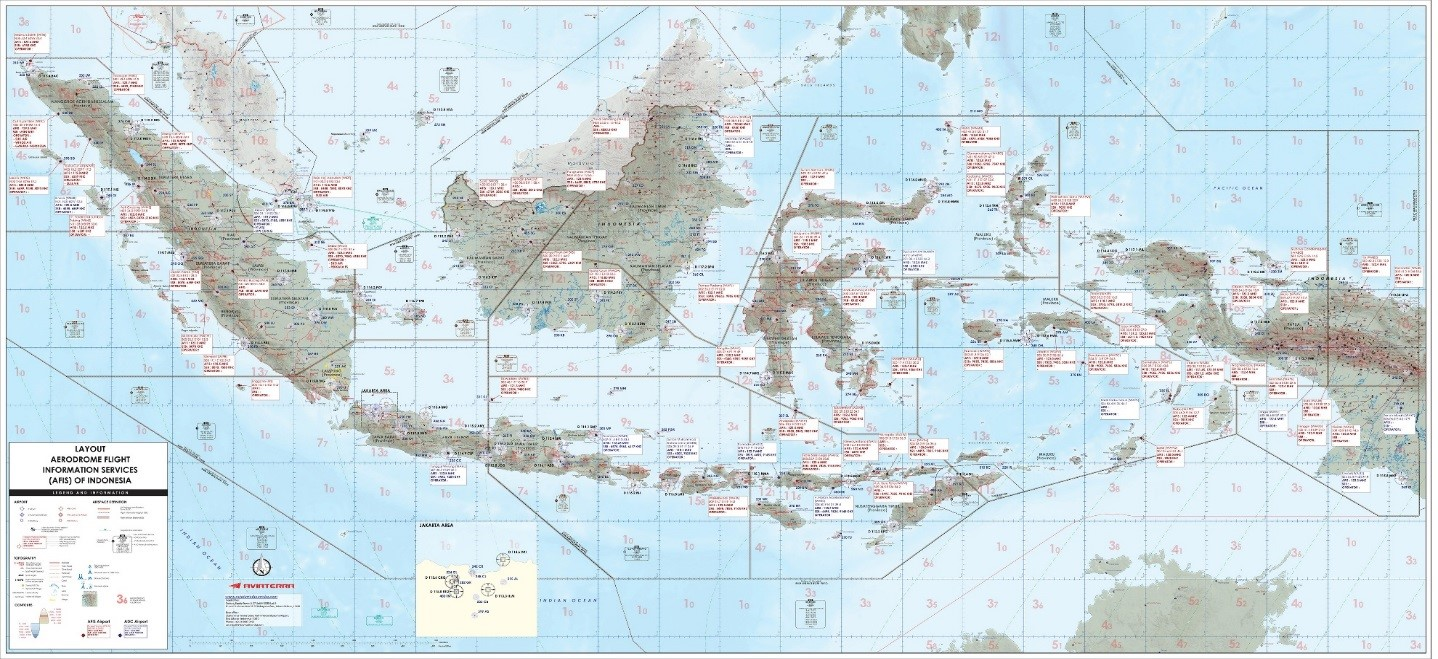
Indonesia, as the world’s largest archipelagic state, must realize that the airspace above the Archipelago is not empty space. It is part of national sovereignty that is non-negotiable. In a world that is increasingly interconnected and vulnerable to asymmetric conflict, those who control the air, and now also cyberspace are those who can safeguard the sovereignty, security, and future of their nation. Therefore, strengthening the Ministry of Defense, the Indonesian Air Force (TNI AU), and national cyber agencies (such as BSSN) must be a top priority. This includes the development of an Indonesian ADIZ, radar modernization, and the establishment of a cybersecurity operations center for the aviation sector.
Without concrete and immediate action, Indonesia risks becoming a transparent air enclave for foreign powers, where commercial aircraft, unmanned vehicles, and even foreign cyber activities can transit and operate without adequate detection. Investment in human resources who master advanced sensor technology and cyber data analytics, along with the harmonization of regulations across ministries and agencies, is a non-negotiable price if we truly intend to defend the sovereignty above the Archipelago for future generations.
Jakarta, April 29, 2026
Chappy Hakim
Indonesia Center for Air Power Studies
