


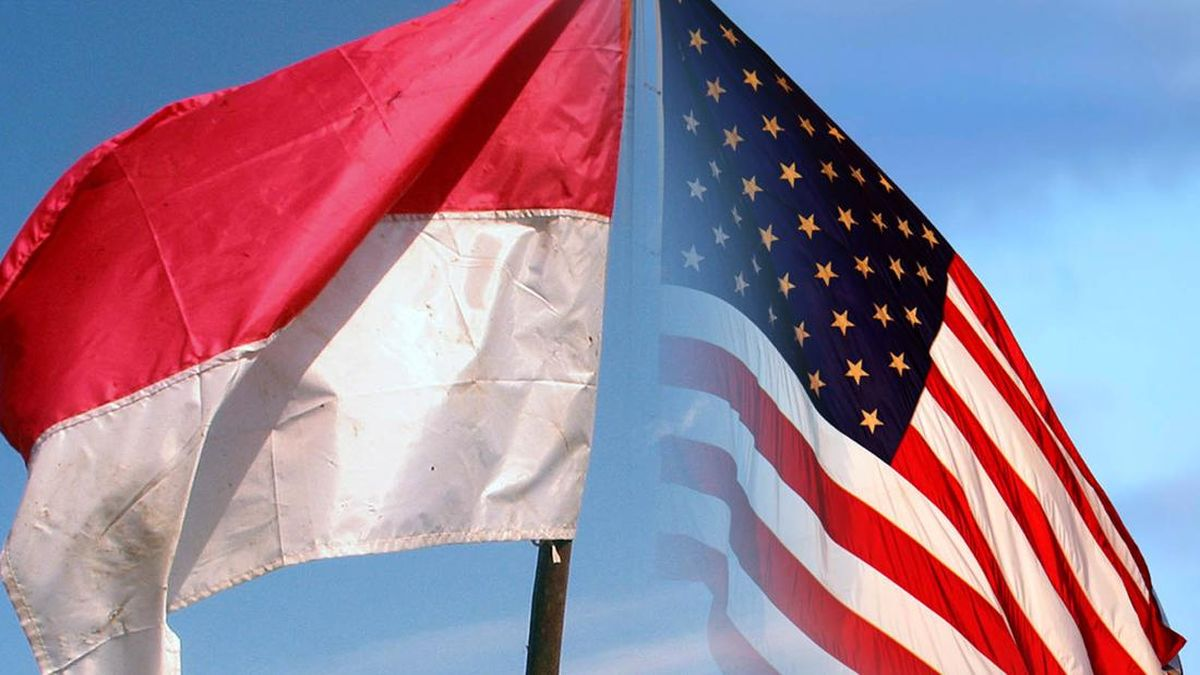
Over the past decade, Indonesia–United States relations have continued to expand and deepen across a wide range of sectors. Trade, investment, defense cooperation, education, technology, and maritime security have all become important pillars of an increasingly mature strategic partnership. As Southeast Asia’s largest democracy and a key player in the Indo-Pacific, Indonesia occupies a growing place in Washington’s strategic outlook. Likewise, the United States remains one of Indonesia’s most important partners in advancing economic development, technological modernization, and defense capability.
The overall trajectory of bilateral relations has been positive. Cooperation in defense and security has reached unprecedented levels, highlighted by the expansion of the Garuda Shield exercises and increasing collaboration in maritime security, military education, and capacity building. Economic ties have also strengthened, while people-to-people exchanges continue to flourish through academic cooperation, research partnerships, and innovation initiatives.
Yet, like any relationship between sovereign nations with distinct national interests, Indonesia–United States relations are not entirely free from challenges. While the foundations of the partnership remain strong, several issues have emerged that require careful diplomatic management. Among them, two have attracted particular attention because they touch upon fundamental principles of Indonesian foreign policy, support for the Palestinian cause and the protection of national sovereignty.
The first concerns Indonesia’s participation in the Board of Peace (BoP) initiative championed by President Donald Trump. The second relates to requests by the U.S. Department of Defense for broader Blanket Overflight Access for American military aircraft operating in the Indo-Pacific. Although neither issue threatens the overall strategic partnership between Jakarta and Washington, both have generated debate among policymakers, strategic analysts, and the broader public in Indonesia.
The Board of Peace and Indonesia’s Commitment to Palestine
The Board of Peace was introduced as a mechanism intended to support peacebuilding, post-conflict reconstruction, and international stability. In principle, Indonesia has every reason to support initiatives aimed at promoting peace and conflict resolution. Indeed, the Indonesian Constitution explicitly mandates the nation to contribute to a world order based on freedom, lasting peace, and social justice. The difficulty, however, lies not in the objective of peace itself but in the composition of the initiative. The absence of Palestinian representation within the Board of Peace framework has raised concerns among many Indonesians. For decades, Indonesia has been among the most steadfast supporters of Palestinian self-determination and statehood. Support for Palestine is deeply embedded in Indonesia’s diplomatic identity and enjoys broad public support across political, religious, and social groups.
Against this backdrop, Indonesia’s participation in a forum that discusses peace and reconstruction while excluding Palestinian representation inevitably raises questions regarding policy consistency. Critics argue that such participation risks creating the perception that Indonesia is lending legitimacy to a mechanism that addresses Palestinian affairs without direct Palestinian involvement. Others maintain that Indonesia’s presence offers an opportunity to influence discussions from within and to advocate for Palestinian interests more effectively.
Regardless of the differing views, the issue has highlighted the delicate balance Indonesia must maintain between engaging constructively with major international initiatives and preserving the credibility of its long-standing commitment to the Palestinian cause.
Blanket Overflight Access and Sovereignty Concerns
The second sensitive issue concerns requests from the U.S. Department of War for broader Blanket Overflight Access for American military aircraft operating across the Indo-Pacific. From Washington’s perspective, expanded overflight access would improve strategic mobility, logistical support, humanitarian assistance, disaster-relief operations, and regional security cooperation. Such arrangements are often viewed as practical measures necessary for a global military power with extensive commitments across multiple regions.
Indonesia, however, views the matter through a broader strategic and political lens. The issue directly touches upon sovereign control over national airspace, one of the most fundamental attributes of statehood. Given Indonesia’s geographical position at the crossroads of the Pacific and Indian Oceans, its airspace constitutes an important strategic corridor linking major global maritime and aerial routes. The sensitivity surrounding this issue has become even greater in light of escalating tensions in the Middle East, particularly amid the growing confrontation between the United States and Iran. Under such circumstances, Indonesian policymakers must carefully assess not only the technical aspects of overflight arrangements but also their wider geopolitical implications. Understandably, concerns arise regarding the possibility that expanded access could indirectly support military activities associated with conflicts in which Indonesia has no direct involvement.
For a nation that consistently adheres to the principles of an independent and active foreign policy, maintaining a clear distinction between cooperation and involvement remains essential. Consequently, the debate over Blanket Overflight Access extends beyond aviation procedures and military logistics. It touches upon national sovereignty, strategic autonomy, and Indonesia’s long-standing commitment to remaining free from alignment with competing power blocs.
Managing Differences Within a Strong Partnership
Despite the sensitivities surrounding these two issues, Indonesia–United States relations remain fundamentally strong and mutually beneficial. The breadth of cooperation between the two countries is far too extensive to be overshadowed by a limited number of policy disagreements. Trade, investment, defense cooperation, education, technological collaboration, and maritime security continue to provide a solid foundation for the partnership.
Indeed, the true measure of a mature strategic relationship is not the absence of differences but the ability to manage them constructively. The discussions surrounding the Board of Peace and Blanket Overflight Access demonstrate that Jakarta and Washington will occasionally approach international issues from different strategic perspectives. Such differences are natural between sovereign nations pursuing their respective national interests.
Ultimately, these two sensitive issues serve as a reminder that the future of Indonesia–United States relations will depend not only on shared interests but also on mutual understanding and respect for each other’s principles and concerns. For Indonesia, maintaining a productive partnership with the United States must remain consistent with its support for Palestinian self-determination and its commitment to safeguarding national sovereignty. For the United States, recognizing these sensitivities is essential to sustaining trust with one of the most influential countries in the Indo-Pacific. The ability of both nations to navigate such challenges through dialogue, diplomacy, and mutual respect will determine the resilience of their strategic partnership in the years ahead.
Notably, both sensitive issues arose from policy initiatives introduced by President Donald Trump, serving as a reminder that even strong strategic partnerships can be affected by shifts in political leadership and foreign policy priorities.Top of Form
Jakarta June 6, 2026
Chappy Hakim – Indonesia Center for Air Power Studies
Bottom of Form
