


(Chappy Hakim)
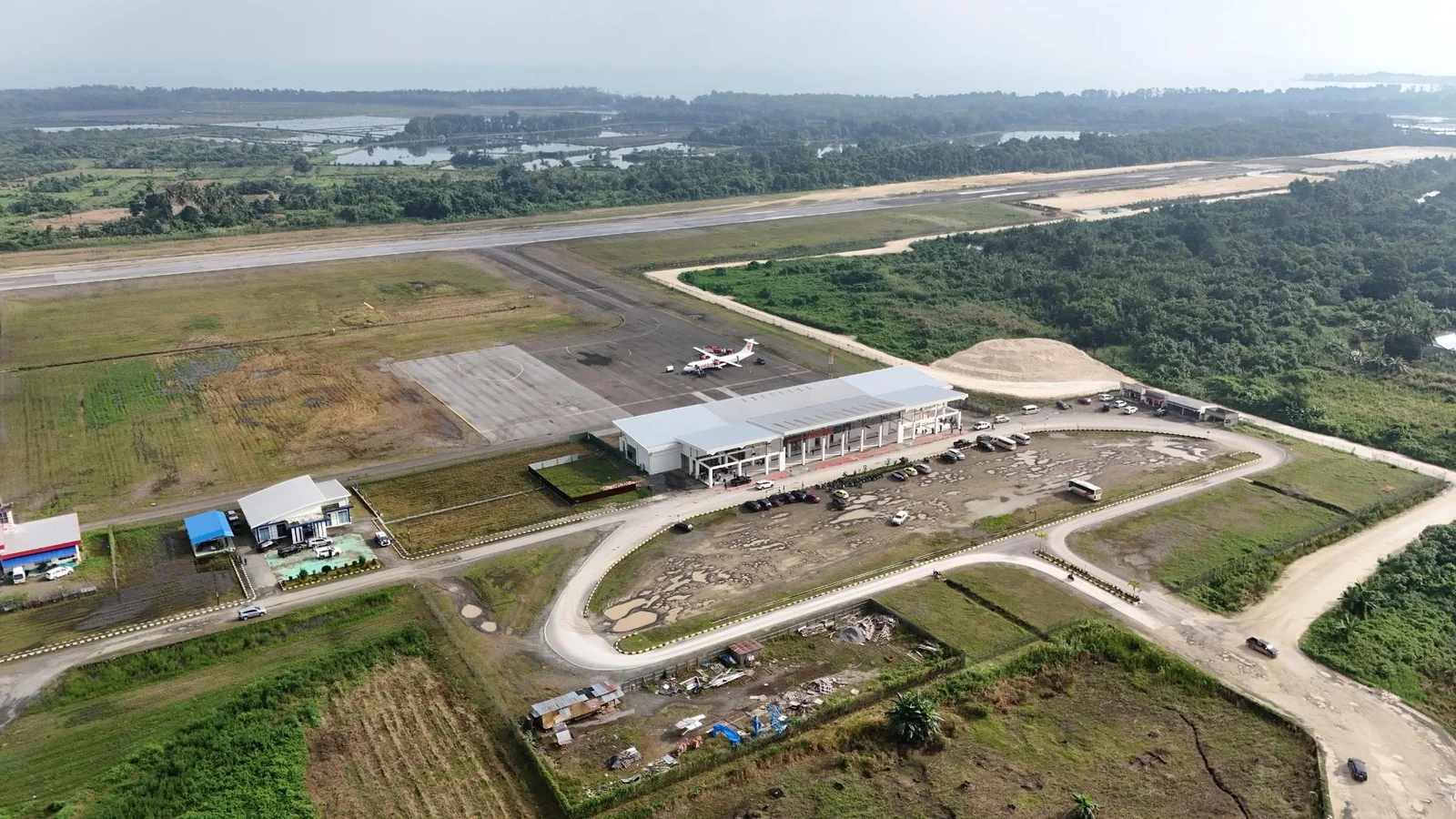
The recent debate over Morowali is in fact far more than a technical dispute about a private airport inside an industrial complex. It is a small but revealing mirror of political dynamics, airspace governance, and the way the state manages its relationship with global capital. The Defence Minister’s statement that there must “not be a state within a state” in Morowali, followed by the Deputy Minister of Transport’s assertion that the IMIP Airport is a legal facility under the oversight of the Ministry of Transportation, shows the public that behind a single airport case lie deeper differences of perspective among the holders of state authority.
From the viewpoint of political science, none of this is surprising. C. Wright Mills, in his theory of the power elite, explains that even in modern democracies, strategic decisions are often taken by a small circle of elites at the centre of power , politicians, military officers, and business interests. Samuel P. Huntington, in The Soldier and the State, goes further in describing how state actors , politicians, businessmen, the military, and the scientific community interact, compete, and collaborate within the arena of power. Above all this, Lord Palmerston, the 19th-century British Prime Minister, famously remarked that in politics there are no eternal friends or eternal enemies, only eternal interests.
Seen through this lens, Morowali should be understood as a concrete manifestation of the interplay of interests among elites and state actors, which then “spills over” into the public domain in the form of diverging statements and interpretations. From this story, at least three important lessons can be drawn , not only for Morowali itself, but for the overall design of Indonesia’s national airspace governance.
1. Returning to the Principle of Unity of Command, Reviving an Aviation Council
The first lesson concerns institutional architecture. In 1955, Indonesia once had an Aviation Council whose members were the key stakeholders in national aviation, chaired alternately by the Minister of Defence and the Minister of Transportation. Within that forum, strategic issues related to airspace , both civil and military were placed on the same table, discussed in a single forum, and translated into a single state position. In the classical management thought of Henri Fayol, one of the most important principles is unity of command. This principle is embedded in the POAC framework , Planning, Organizing, Actuating, Controlling. Planning, organising, execution, and oversight can only be effective when the lines of command and authority are clear, non overlapping, and mutually reinforcing rather than mutually undermining.
The Morowali episode shows precisely the opposite, one ministry warns of the danger of a “state within a state”, while another ministry emphasises legality and completeness of permits. This does not automatically mean one side is wrong. However, to the public it clearly suggests a dissonance in the voice of the state. Here lies the relevance of reviving an Aviation Council or a similar mechanism as a “synchronisation chamber” linking the Ministry of Defence, Ministry of Transportation, the Indonesian Air Force, AirNav, Customs, Immigration, intelligence services, and other relevant actors. With such an integrated forum, policies on airspace management especially those concerning special status airports, strategic industrial zones, and international flight activities would be better aligned with the principle of unity of command.
The state would then speak with one voice, rather than as an ensemble of clashing notes more like an orchestra that recognises it always needs a conductor, who gives cues and direction in accordance with the agreed score.
2. Morowali as an Air Sovereignty Alarm, Risks in Delegated Airspace
The second lesson goes to the heart of air sovereignty. Morowali lies in an area that, both legally and operationally, is under the full authority of Indonesia’s national aviation regulators. There is no international agreement that delegates air navigation services over Morowali to another country. On paper, the airspace above Morowali is entirely “our own” Indonesia holds full sovereignty in the skies there. Yet it is precisely in this fully sovereign airspace that uproar has arisen about the potential for a “state within a state”. This leads to an even sharper question, if a governance problem of this magnitude can emerge in Morowali, where the airspace is fully under Indonesia’s National Aviation Authority, what about those areas whose airspace is, in practice, under foreign authority such as around Natuna and Tanjung Pinang in connection with the 2022 Indonesia Singapore agreement.
The risks here are layered. First, in terms of sovereignty when parts of territorial airspace are delegated, a state’s ability to exercise the three core functions of air sovereignty control of the air, use of airspace, and law enforcement is inevitably constrained, or at the very least becomes dependent on coordination with another party. Second, in terms of perception: if in an area that is entirely under our own control symptoms of a “state within a state” can already be seen, then in areas where some technical authority is held by a foreign entity, the risks of gaps in oversight and control are logically even greater.
The lesson is clear, Indonesia must be sovereign in practice over its entire territorial airspace, not only sovereign on paper through agreements and regulations. The Morowali issue is an early warning that airspace governance requires serious reform and that any delegation of national airspace must be viewed very carefully from the standpoint of sovereignty, not merely from the angle of technical efficiency.
3. Being Fair to Investors, Avoiding the Reflex to Blame “Foreigners”
The third lesson concerns fairness and rationality in reading problems. In every controversy involving foreign investors, there is often a strong reflex to immediately point the finger at external actors as the “main culprits”. In reality, the structure of the problem is usually much more complex. Contracts in strategic industrial zones such as Morowali tend to span multiple political administrations. They may be drafted in one era, implemented in another, and renegotiated when economic or political circumstances change. Over such long time frames, interests can shift, new patterns of patronage can emerge, and there is always the potential for collusion between certain actors on our side and the investors. For this reason, the Morowali issue must be approached in a fair minded way. Responsibility does not necessarily lie fully with the investor. Lapses in oversight can just as easily stem from weaknesses in regulation, conflicts of authority among state institutions, or opportunistic and transactional behaviour at both local and central levels. To blame foreign investors unilaterally risks sending a negative signal to the international investment community at a time when Indonesia still needs external investment to drive economic growth. What is required is systemic reform, clear regulations, firm oversight, integrated institutions, and consistent law enforcement. Only with such foundations can Indonesia safeguard the dignity of its sovereignty and national security while remaining a credible, non-intimidating destination for investors who genuinely abide by the rules.
A Technical Note: International Aviation and Airport Status
There is one technical aspect in the Morowali debate that must not be overlooked: every international flight activity carries legal and administrative consequences governed by national regulations and international standards (ICAO). The status of an airport whether domestic, international, commercial, or private is not a mere administrative label it determines the state’s obligation to provide immigration, customs, quarantine, security, and air navigation services that meet specified standards. In other words, if a private airport serves international flights, then flight permits, routes, aircraft types, and the movement of passengers and cargo must strictly comply with the rules. The state is obliged to be fully present there must be immigration officers, customs officials, an air navigation authority, proper recording and monitoring not simply a “legal facility on paper” while implementation on the ground remains lax. On this point, Morowali becomes a test, are we truly consistent in enforcing these standards, or are we still compromising them in favour of short-term interests?
In the end, the main lesson from the Morowali issue is a call to strengthen the governance of Indonesia’s airspace and aviation sector with clear minds and a long-term vision. Morowali shows that at the intersection of politics, business, and sovereignty, the state cannot afford to be hesitant. Indonesia needs robust institutions such as an Aviation Council, real and undivided air sovereignty over the entire territory of the Republic, and a fair attitude in assessing the role of investors. With this combination, Indonesia can manage its own skies in a sovereign and secure manner, while remaining open and welcoming to sound, responsible investment. The National Airspace is a strategic natural resource which, under the Constitution, must be controlled by the state and devoted as far as possible to the welfare of the people.
Jakarta, 4 December 2025
Chappy Hakim
Indonesia Center for Air Power Studies
