


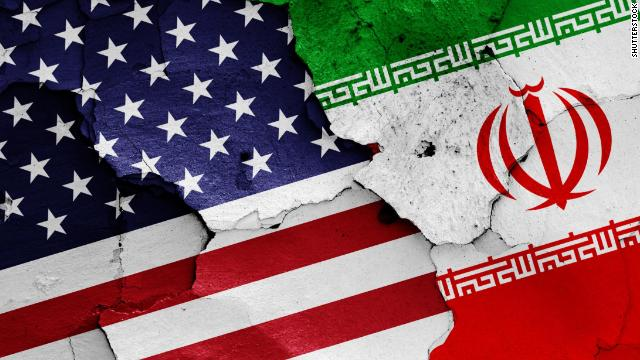
For more than four decades, the relationship between the United States and Iran has been in a state of nearly permanent strategic confrontation. Since the outbreak of the Iranian Revolution, which overthrew the pro Western regime in Tehran, Washington has viewed Iran as one of the primary geopolitical challenges in the Middle East. Pressure on Iran has been applied through various instruments, including economic embargoes, diplomatic isolation, intelligence operations, and limited military strikes. Sanctions, initiated as early as 1979, have evolved into one of the most extensive sanctions regimes in modern history. The objective is not merely to pressure Iran’s economy but also to compel a change in the country’s strategic behavior, particularly concerning its nuclear program, missile development, and support for regional militia groups.
This strategy has not been limited to economic pressure. In recent decades, indications have emerged that some strategic circles in Washington envision a more far reaching scenario, regime change in Tehran. This type of operational model is not new in the practice of American geopolitics. History shows that in several instances, Washington has supported or facilitated the overthrow of regimes deemed misaligned with its strategic interests.
It is within this framework that the hypothetical idea of a D Day against Iran arises, a major military operation aimed at rapidly crippling Iran’s defensive capabilities through air superiority and precision strikes, followed by political pressure designed to trigger regime change. Judging by past experiences, this operational pattern appears to have been successfully applied in several other countries. The covert operation supported by the US in the 1953 Iranian coup d’état successfully overthrew the nationalist government of Mohammad Mossadegh. The US invasion of Iraq in 2003 toppled Saddam Hussein’s regime in a relatively short time. The NATO intervention in the Libyan conflict in 2011 led to the collapse of Muammar Gaddafi’s government. These experiences have reinforced the belief among some analysts that Western military dominance, particularly air power, can be used to overthrow regimes hostile to Western strategic interests. Yet, Iran is not Iraq, Libya, or Afghanistan. And this is precisely where the fundamental difference lies.
Killing a Figure Does Not Kill the System
Within modern military doctrine, there exists a concept known as the decapitation strategy, a strategy to paralyze an enemy by eliminating its leader or key figures within its command structure. The logic is simple, if a country’s military or political leaders are eliminated, the command structure will descend into chaos, ultimately weakening that nation’s ability to defend itself. This strategy has been employed in various modern conflicts, including by the United States in its military operations in Iraq. In some cases, such operations have indeed succeeded in creating temporary disorientation within the enemy’s leadership structure. However, the Iranian experience demonstrates that this strategy has very clear limitations.
One of the most dramatic events in the US Iran conflict was the assassination of Iranian General Qasem Soleimani in 2020. Soleimani was the commander of the Quds Force of the Islamic Revolutionary Guard Corps and was regarded as the chief architect of Iran’s military strategy in the Middle East. He played a pivotal role in building a network of allies and militias that extended Iranian influence from Iraq to Lebanon. Many Western analysts predicted that Soleimani’s killing would weaken Iran’s regional operational network. What transpired, however, was the opposite. Iran’s military structure continued to function, and its alliance network did not collapse. This event demonstrates that Iran’s strategic strength does not rest solely on specific individuals, but rather on its doctrine, institutions, and the organizational system of the state.
The same applies to Iran’s political leadership. Iran’s Supreme Leader, Ali Khamenei, is often considered the most influential figure in the country’s political system. However, within the structure of the Islamic Republic of Iran, this position is not merely a personal office but part of an institutional system known as velayat e faqih, or Guardianship of the Islamic Jurist. This means that if a leader dies or is killed, the system is designed to automatically produce a successor. In some cases, the successor who emerges may be younger, more ideological, and even more hardline in facing external pressure. Thus, the elimination of an individual does not automatically destroy the system that sustains it.
Iran Learns from the History of US Intervention
One of the most crucial factors explaining Iran’s resilience is its ability to learn from historical experience, both its own and that of other nations. The greatest historical trauma for Iran was the 1953 coup that overthrew Mossadegh’s government. That event left a profound lesson for Iran’s strategic elite, a country lacking sufficient defensive capabilities will always be vulnerable to external intervention. Since the 1979 revolution, Iran has systematically studied various US military operations against other countries.
The US invasion of Iraq in 2003 demonstrated how air dominance could destroy a nation’s conventional military in a short time. The NATO intervention in the Libyan conflict showed that sustained aerial bombardment could dismantle a country’s political stability until its regime eventually collapsed. The long war in Afghanistan illustrated how a conflict could transform into a protracted struggle with no clear victory. From these various experiences, Iran drew a critically important strategic conclusion, to withstand American pressure, a nation must not engage in conventional warfare.
This is precisely why Iran chose to develop an asymmetric defense strategy. This strategy encompasses the development of ballistic missiles, drones, extensive underground tunnel networks, and proxy warfare capabilities through regional allies. Organizations like Hezbollah in Lebanon and the Houthi movement in Yemen have become integral parts of Iran’s regional influence network. With this strategy, a conflict with Iran would not be confined to Iranian territory. Instead, it could spread to various points across the Middle East.
Sanctions as an Engine of Innovation
A significant paradox in the US Iran conflict is that the economic sanctions intended to weaken Iran have, in fact, spurred innovation within its defense system. For decades, Iran has faced limited access to Western military technology. This condition forced the country to develop its domestic defense industry independently. Iran has developed a large scale ballistic missile program, including systems housed in difficult to detect underground facilities. Furthermore, Iran has advanced its drone technology across various types, from reconnaissance drones to attack drones. These military facilities are often constructed within extensive underground tunnel networks, making them difficult to destroy through aerial bombardment. In other words, economic sanctions have not only created pressure but have also accelerated technological and military adaptation.
A Strategic Trap for America
In many modern conflicts, the United States has relied on air dominance as its primary instrument for winning wars. This strategy is often referred to as the bomb to win approach, destroying an enemy’s military capabilities through precision airstrikes before a ground operation commences, or even without a ground operation at all. This approach proved effective in several conflicts, such as the 1991 Gulf War and the 2003 invasion of Iraq. However, Iran appears to have recognized this pattern early on and designed a defense system specifically aimed at neutralizing that advantage. Iran has dispersed its military facilities across a wide network, often situated underground. Additionally, the country has developed missile and drone systems capable of striking targets far beyond its borders.
If a conflict with the United States were to actually occur, the war would not only take place within Iranian territory but could also engulf the entire Middle East. Global energy routes, US military bases in the region, and Washington’s allies could all become part of the conflict zone. Under such circumstances, a military operation initially designed as a swift strike could devolve into an extremely complex regional conflict. This is where the notion emerges that Iran may have actually designed a strategic trap for its adversary. If the United States initiates a conflict under the assumption that air dominance can quickly break Iran’s power, that conflict could instead escalate into a prolonged and uncontrollable war. And if this trap was indeed designed by Iran, then only Iran knows with certainty where the exit path from such a conflict lies.
Conclusion
The confrontation between the United States and Iran over more than four decades demonstrates that modern conflict is determined not by military might alone. Institutional resilience, the capacity to learn from history, and technological adaptation play equally important roles in determining the ultimate outcome of a conflict. Iran’s experience shows that economic pressure, the assassination of key figures, and diplomatic isolation are not always sufficient to bring down a nation. On the contrary, a nation capable of transforming such pressure into a source of innovation and resilience can endure even under the most severe duress. In the context of global geopolitics, the US Iran rivalry stands as one of the most compelling examples of how a nation attempts to confront the dominance of a major power through a combination of asymmetric strategy, national resilience, and long term geopolitical calculation.
