


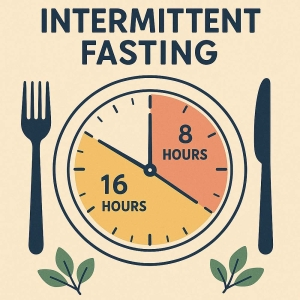
In recent years, intermittent fasting has become one of the most widely discussed lifestyle patterns. Some people adopt it to lose weight, while others use it to improve metabolism, regulate blood sugar, or maintain general fitness. Behind its popularity lies a biological term often associated with it, autophagy. The term is commonly simplified as “the body’s process of cleaning itself.” While this explanation is not entirely wrong, autophagy is in fact a deeper and more complex cellular mechanism. Intermittent fasting is not a diet in the conventional sense of choosing specific types of food. Rather, it is an eating schedule. One of the most popular patterns is 16:8, which means fasting for 16 hours and eating within an 8-hour window. Other patterns include 14:10, 18:6, or a 24-hour fast once or twice a week. During the fasting period, people usually continue to drink water, plain tea, or black coffee without sugar. What is restricted is not calorie-free fluid, but energy intake from food and caloric drinks.
Biologically, the human body has a remarkable ability to adapt to changes in energy availability. After a meal, the body enters a “fed state.” Blood glucose rises, insulin works actively, and the body tends to store energy as glycogen or fat. After several hours without food, insulin levels begin to fall. The body then starts using stored energy, first from glycogen and later, gradually, from fat. During this phase, several metabolic mechanisms shift, including improved insulin sensitivity, greater use of fat as an energy source, and the possible activation of autophagy. Autophagy is a recycling mechanism within the cell. Human cells are not static. At any given time, proteins may be damaged, organelles may age, and cellular components may no longer function optimally. Through autophagy, the cell encloses these damaged components, transports them to lysosomes, and breaks them down into basic materials that can be reused. In other words, autophagy is a form of internal cellular maintenance. It is not merely “waste disposal,” but also a biological efficiency system that helps cells survive under stress, nutrient deprivation, or internal damage.
Autophagy gained global attention when Yoshinori Ohsumi received the 2016 Nobel Prize in Physiology or Medicine for his discoveries concerning the mechanisms of autophagy. His research on yeast opened the way for broader understanding of how eukaryotic cells, including human cells, recycle their own components. This discovery is important because autophagy is related to aging, infection, neurodegenerative disease, cancer, metabolism, and the body’s response to starvation or energy deprivation. The connection between intermittent fasting and autophagy is based on a plausible biological logic. When the body does not receive food for a certain period, cells face limited nutrient availability. Under such conditions, the body tends to activate mechanisms of conservation and recycling. Molecular pathways such as AMPK and mTOR are involved. Put simply, when nutrients are abundant, mTOR is active and the body tends to build and store. When nutrients are limited, mTOR is suppressed, AMPK activity increases, and cellular repair and recycling processes, including autophagy, are more likely to occur.
However, the relationship between intermittent fasting and autophagy in humans must not be oversimplified. Much of the strongest evidence on autophagy comes from studies on cells, yeast, mice, or other animal models. In humans, the process is more difficult to measure directly. It is not scientifically precise to say that after 16 hours of fasting, autophagy is definitely “maximally active” in everyone. The body’s response is influenced by age, sex, metabolic condition, physical activity, sleep quality, food composition, nutritional status, and overall health. This is where it becomes important to distinguish science from popular claims. On social media, intermittent fasting is often portrayed as a shortcut to an ideal body, longevity, or even the cure for various diseases. Scientific evidence is more cautious. Intermittent fasting may help some people reduce calorie intake, lose weight, improve insulin sensitivity, and improve certain metabolic markers. Yet these benefits are not always unique to fasting itself. Some may simply result from lower total calorie intake and better food quality.
Therefore, the success of intermittent fasting should not be measured only by how long one can endure hunger. What matters more is the overall dietary pattern. If a person fasts for 16 hours but then consumes ultra-processed food, excessive sugar, fried food, and uncontrolled portions, the metabolic benefits may disappear. Conversely, if the eating window is filled with sufficient protein, vegetables, fruits, healthy fats, complex carbohydrates, and good hydration, intermittent fasting can become a reasonable tool for health management. Autophagy should also not be understood as a process that is always beneficial in every circumstance. At the right level, autophagy helps cells survive and repair themselves. But in certain diseases, especially cancer, its role can be complex. On one hand, autophagy may help prevent cellular damage. On the other hand, under certain conditions, cancer cells may also use autophagy to survive in a hostile environment. For this reason, the claim that fasting automatically “kills cancer” is a dangerous oversimplification. In patients with serious illness, fasting must be considered medically, not merely followed as a trend.
Intermittent fasting is not suitable for everyone. Children, adolescents in their growth period, pregnant or breastfeeding women, people with a history of eating disorders, diabetics using insulin or certain medications, people with severe chronic illness, underweight individuals, and those with special nutritional needs must be especially careful. In these groups, the risks of hypoglycemia, nutritional deficiency, hormonal disturbance, dizziness, weakness, or relapse of disordered eating may outweigh potential benefits. In the Indonesian context, intermittent fasting is not an unfamiliar concept. Fasting has long existed in society, both as a religious practice and as a discipline of self-control. The difference is that modern intermittent fasting is usually discussed within the framework of metabolism and health. Both perspectives meet at one point, the awareness that human beings do not need to eat continuously throughout the day. The body has its own rhythm, and giving the digestive system a pause can be part of a disciplined life.
Still, discipline must be accompanied by knowledge. Fasting is not an excuse to neglect nutrition. Autophagy is not a magic formula. Intermittent fasting is not a universal medicine. It is only one instrument in the larger orchestra of human health, alongside sleep quality, physical activity, stress management, sunlight exposure, social relationships, and food quality. Intermittent fasting and autophagy teach us one important lesson, the human body possesses extraordinary biological intelligence. In times of abundance, it builds and stores. In times of limitation, it adapts, repairs, and recycles. The task of human beings is not to force the body into extremes, but to understand its rhythm. When practiced wisely, intermittent fasting may help cultivate self-control and support metabolic health. But when practiced excessively or without regard to individual conditions, it may become a burden.
Health is not the result of one single method. It is a balance between science, discipline, and moderation. Intermittent fasting may be useful, and autophagy is an important biological process. Yet both must be placed proportionally, as part of caring for the body, not as a new myth accepted without reason.
Jakarta, 15 June 2026
Chappy Hakim
